KEY TAKEAWAYS
- ADAS calibration re-aims the cameras and radar behind your driver-assistance features.
- It’s commonly needed after bumper, mirror, windshield, alignment, and structural work.
- The carmaker’s repair procedure decides when calibration is required.
- AAA’s 2023 study found ADAS work averaged 37.6 percent of repair cost across four scenarios.
- We do calibrations in house, so repair, calibration, and final scan happen in one shop.
ADAS calibration is the process of re-aiming the cameras and radar that run your car’s driver-assistance features, so they see the road exactly where the carmaker intended. It’s usually needed after a collision near a sensor, after windshield replacement, after a wheel alignment on many cars, and whenever a bumper, grille, or mirror with a sensor is removed.
If your car has lane-keep assist, adaptive cruise control, automatic emergency braking, or blind-spot warnings, it has ADAS. Most cars built in the last several years do. A sensor that’s off by a degree or two can look fine on the dashboard and still react late, or at the wrong thing. That’s why we do calibrations in house at our Albrae Street shop instead of skipping the step.
What is ADAS, and where do the sensors live?
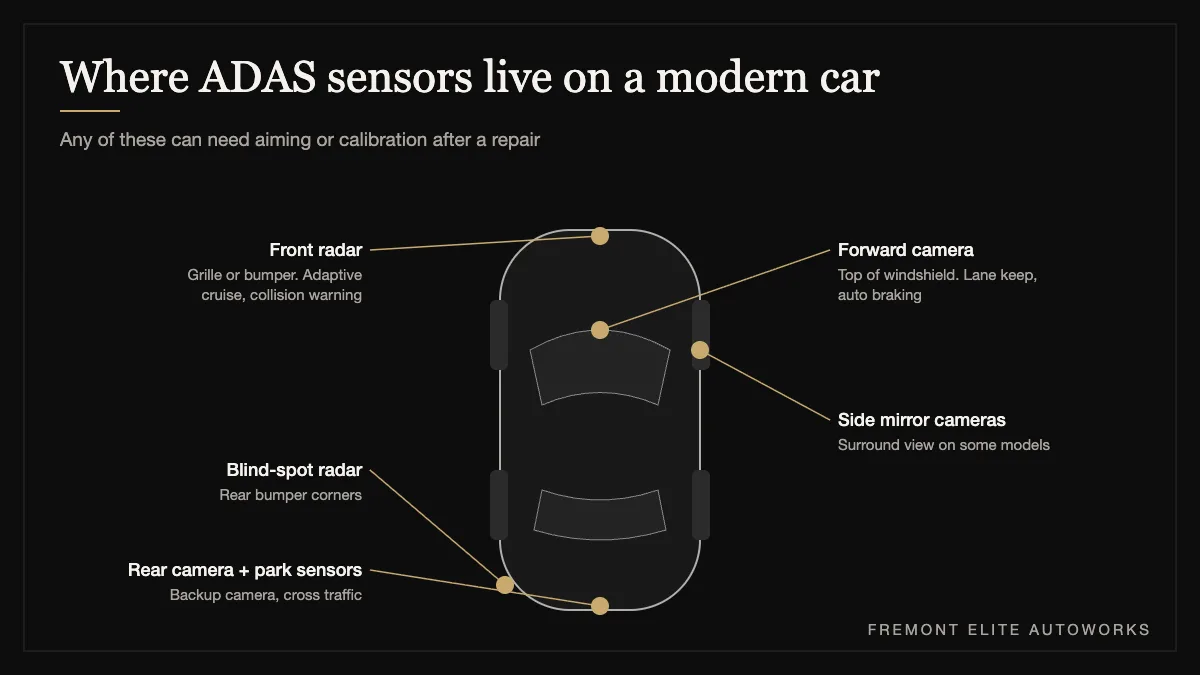
ADAS stands for advanced driver-assistance systems. The main sensors are:
- Forward camera at the top of the windshield, used for lane keeping, traffic sign reading, and emergency braking.
- Front radar behind the grille or bumper, used for adaptive cruise control and collision warning.
- Blind-spot radar in the rear bumper corners.
- Rear camera and parking sensors in the bumper and trunk area.
- Side cameras in the mirrors on cars with surround view.
When does a car need ADAS calibration?
Look at the sensor map and the pattern is obvious. The parts most likely to be damaged in a crash are exactly where the sensors are mounted. Calibration is commonly needed after:
- Front or rear bumper repair or replacement on a car with radar or parking sensors.
- Windshield replacement on a car with a forward camera. See our windshield replacement guide.
- Side mirror replacement on cars with blind-spot or surround-view cameras.
- Wheel alignment or suspension work, since many systems use the car’s thrust angle as their reference.
- Airbag deployment or structural repair.
- A dashboard warning light for a driver-assistance system after a repair.
The carmaker’s repair procedures decide whether calibration is required, not the shop’s opinion. We look up the procedure for your exact vehicle.
What does the calibration process look like?
- Pre-repair scan. We read the car’s computers for stored fault codes before starting work, so nothing is missed.
- Repair. Brackets, bumpers, and glass go in at factory positions. A bracket bent by a few millimeters will throw the calibration off.
- Static calibration. The car sits on a level floor in front of targets placed at precise distances. The scan tool tells the camera or radar where the targets are.
- Dynamic calibration. Some systems learn by driving on well-marked roads at set speeds.
- Post-repair scan. We confirm no fault codes remain and the systems report ready.
What does ADAS add to the cost of a repair?
The cost is real, and it’s one reason repair bills are higher than they used to be. In a December 2023 study, AAA found that ADAS parts, labor, and calibration made up an average of 37.6 percent of repair costs across four common scenarios. Trade publication Autobody News reported the same findings and passed along AAA’s advice that drivers prioritize repairing these systems so they work as intended.
| AAA repair scenario | ADAS-related cost | Share of total repair |
|---|---|---|
| Frontal collision | $1,540.92 | 13.2% |
| Side mirror replacement | $1,067.42 | 70.8% |
| Rear collision | $684.63 | 40.9% |
| Windshield replacement | $360.00 | 25.4% |
Those are national averages from AAA’s sample vehicles, not our prices. Your cost depends on the car and the systems involved. When the manufacturer requires calibration after a covered repair, it’s normally part of the insurance claim. Our guide to auto body estimates in California shows where it appears.
Why do calibration and wheel alignment go together?
Many forward cameras and radars use the car’s thrust angle, the direction the rear wheels point, as their reference for “straight ahead.” If the alignment is off, a perfectly aimed camera can still think the car is drifting. That’s why, after suspension or wheel damage, alignment comes first and calibration second. We subcontract alignments to a trusted alignment company, then calibrate once the car is tracking straight.
Why is skipping calibration a real risk?
A misaimed camera can put your lane-keep assist on the wrong line. A radar pointed slightly off can brake late in stop-and-go traffic, or brake for something that isn’t in your lane. Drivers rarely notice until the system does something unexpected at speed.
In Fremont, that means the places where these systems work hardest: the stop-and-go stretch of I-880 near Stevenson and Mowry, merges onto I-680, and lane changes on Mission Boulevard. Getting the calibration right is part of fixing the car, not an add-on.
“We do ADAS calibrations, and we do have EV tools as well.”
JAZ, OWNER
Why do we calibrate in the same shop?
Many shops send calibration out as sublet, which adds a trip and a day or two. Because we do calibrations ourselves, the repair, the calibration, and the final scan happen in one place. The same team that installs the bumper bracket also aims the radar and checks the result.
It also matters for EVs. Teslas rely heavily on cameras, and after a collision or glass replacement those cameras need careful checking. Read more in our guide to Tesla collision repair in Fremont.
What do Fremont drivers often ask?
- “My windshield was replaced by a mobile service. Do I still need calibration?” If your car has a forward camera, probably yes. Ask the installer whether calibration was done and get the report.
- “The warning light went off by itself. Am I fine?” Not necessarily. Some systems clear the light while the aim is still off. A post-repair scan and calibration check is the only way to know.
- “Can I just drive and let it recalibrate?” Only systems the manufacturer designed for dynamic calibration work that way, and only when the correct procedure is followed.
For the full picture of the repair process, see our complete guide to a car accident in Fremont.
Getting ADAS calibration done right in Fremont
- Sensors live in bumpers, grilles, mirrors, and glass, which is why collisions affect them.
- Calibration follows the carmaker’s procedure: scan, repair, calibrate, scan again.
- AAA found ADAS work averaged 37.6 percent of repair cost in its study. It shouldn’t be skipped.
Call (510) 634-3433 or request a free estimate. We’ll scan the car, repair it, and calibrate it in one shop.
Frequently asked questions
What is ADAS calibration?
It’s re-aiming the cameras and radar used by features like lane-keep assist, adaptive cruise, and automatic emergency braking, so they detect the road exactly as the manufacturer designed.
Do I need ADAS calibration after windshield replacement?
If your car has a camera mounted on the windshield, the carmaker usually requires calibration after replacement. Ask for proof it was done.
How long does ADAS calibration take?
Many calibrations take one to a few hours, depending on the system and whether it needs static targets, a road drive, or both.
Does insurance pay for ADAS calibration?
When the manufacturer requires calibration as part of a covered repair, it’s normally included in the claim. It should appear on the estimate.
Does Fremont Elite Autoworks do ADAS calibration in house?
Yes. We do ADAS calibrations at our shop at 41589 Albrae Street, along with pre-repair and post-repair scans.
Sources
- AAA. Cost of ADAS Repairs (December 2023).
- Autobody News. Fixing ADAS Systems Makes Up Over a Third of Collision Repair Costs (accessed October 2026).
- Auto Glass Safety Council. Understanding the Importance of Calibration: What Are the Facts?.
- California Department of Insurance. Auto Body Repair Consumer Bill of Rights.

Jaz calibrates cameras and radar in the same bay where the bumper goes back on, at 41589 Albrae Street. He spent three and a half years in a dealership body shop before opening here in May 2023. Read our story. Related service: Collision Repair Experts.
Keep reading
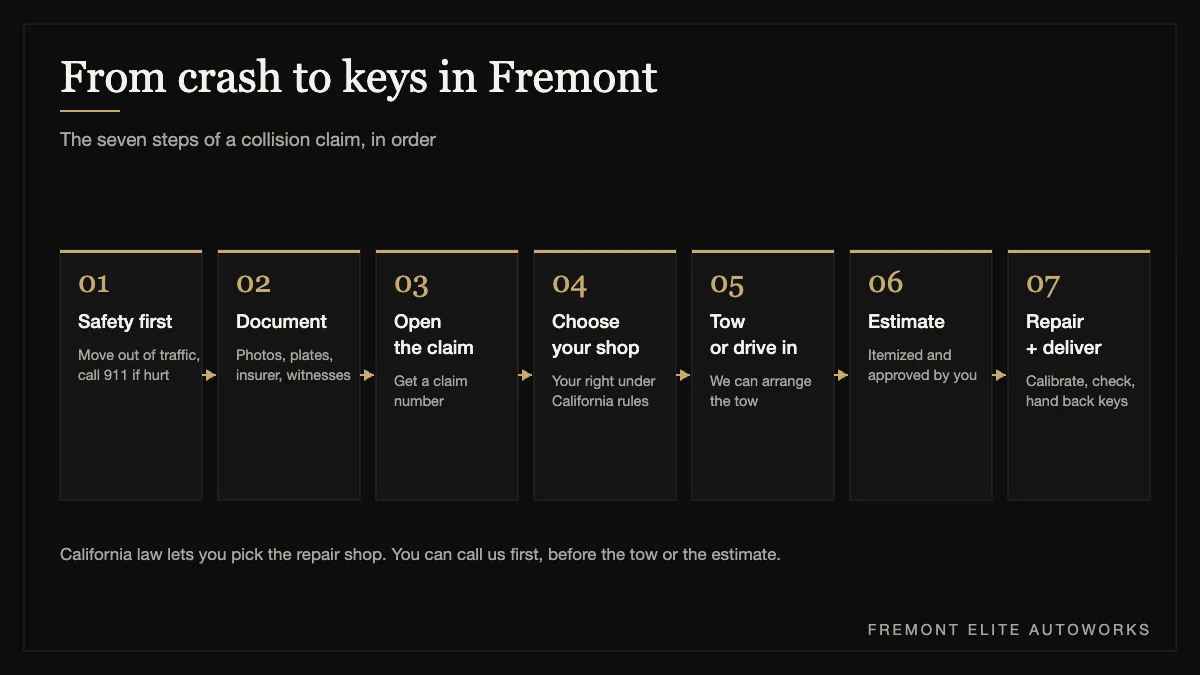 THE FREMONT COLLISION GUIDEWhat to Do After a Car Accident in Fremont: The Complete Repair GuideEvery step from the crash scene to getting your keys back, written by the shop that handles Fremont claims every week.
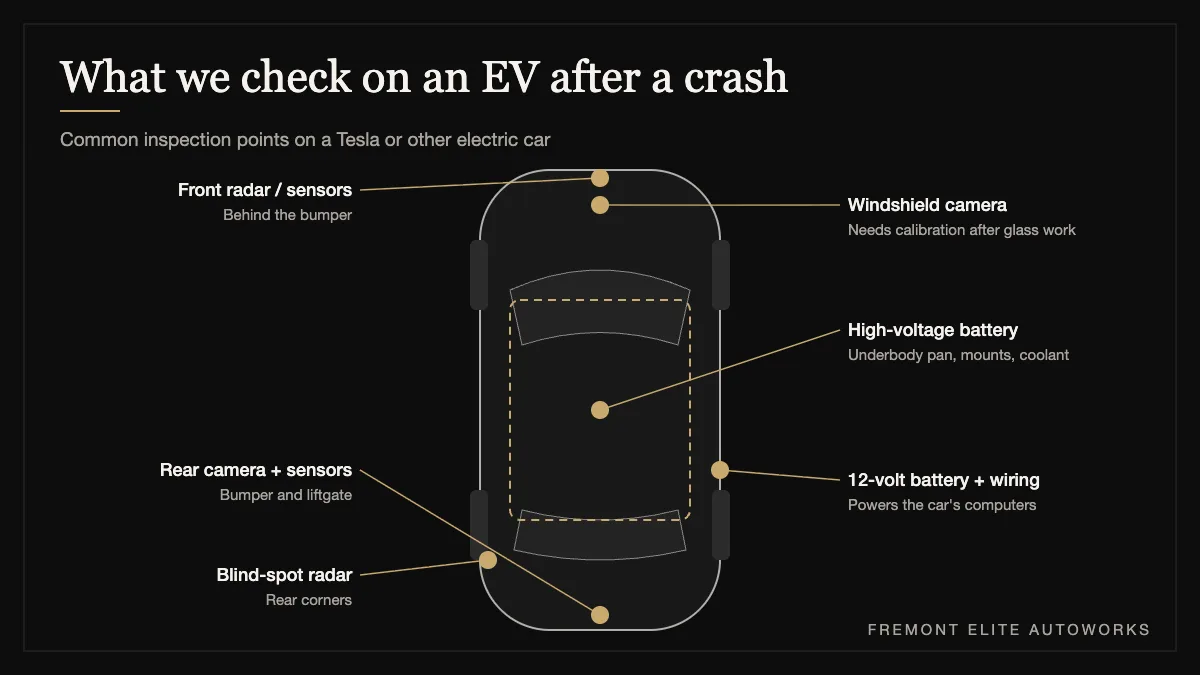 EV & TESLA REPAIRTesla Collision Repair in Fremont: What EV Owners Should KnowHow EV repairs differ from gas cars, and what to ask a shop before your Tesla goes in.
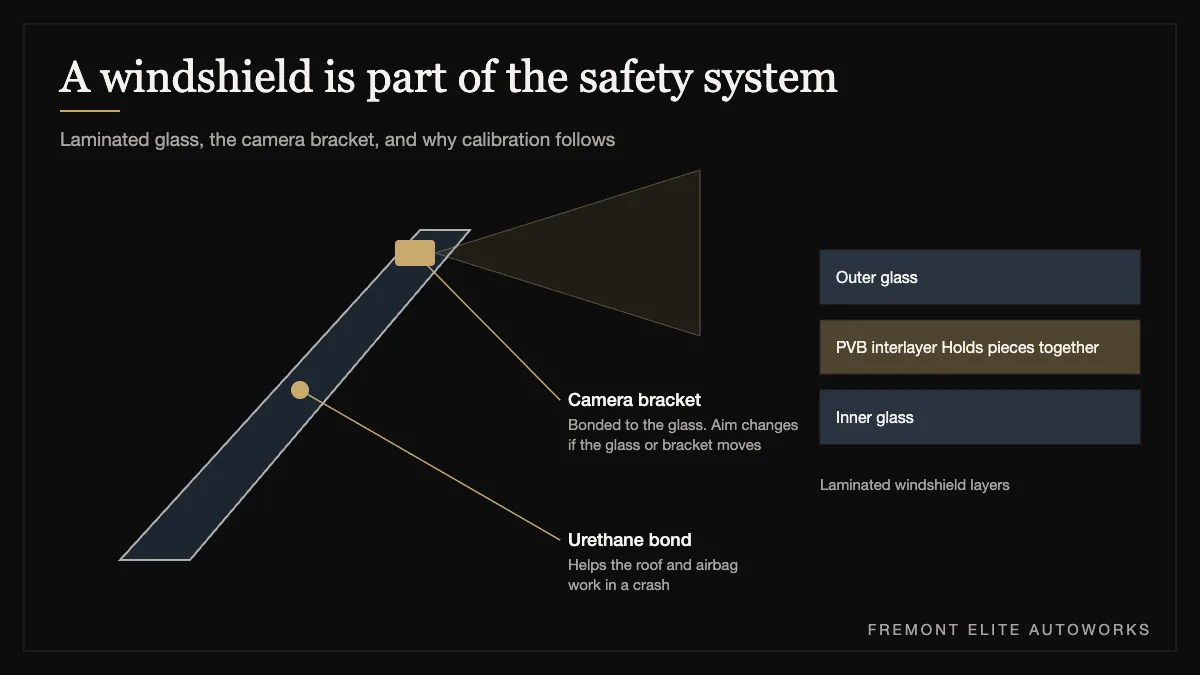 AUTO GLASSWindshield Replacement in Fremont: Insurance, Glass Types and Camera CalibrationRepair or replace, which glass to choose, how insurance handles it, and the calibration step most people miss.